Kyiv
Kyiv


- Home
- Blog
- Copart vs. IAAI: What's the difference between auctions and where is the best place to buy a car from the US?
Copart vs. IAAI: What's the difference between auctions and where is the best place to buy a car from the US?
Articles
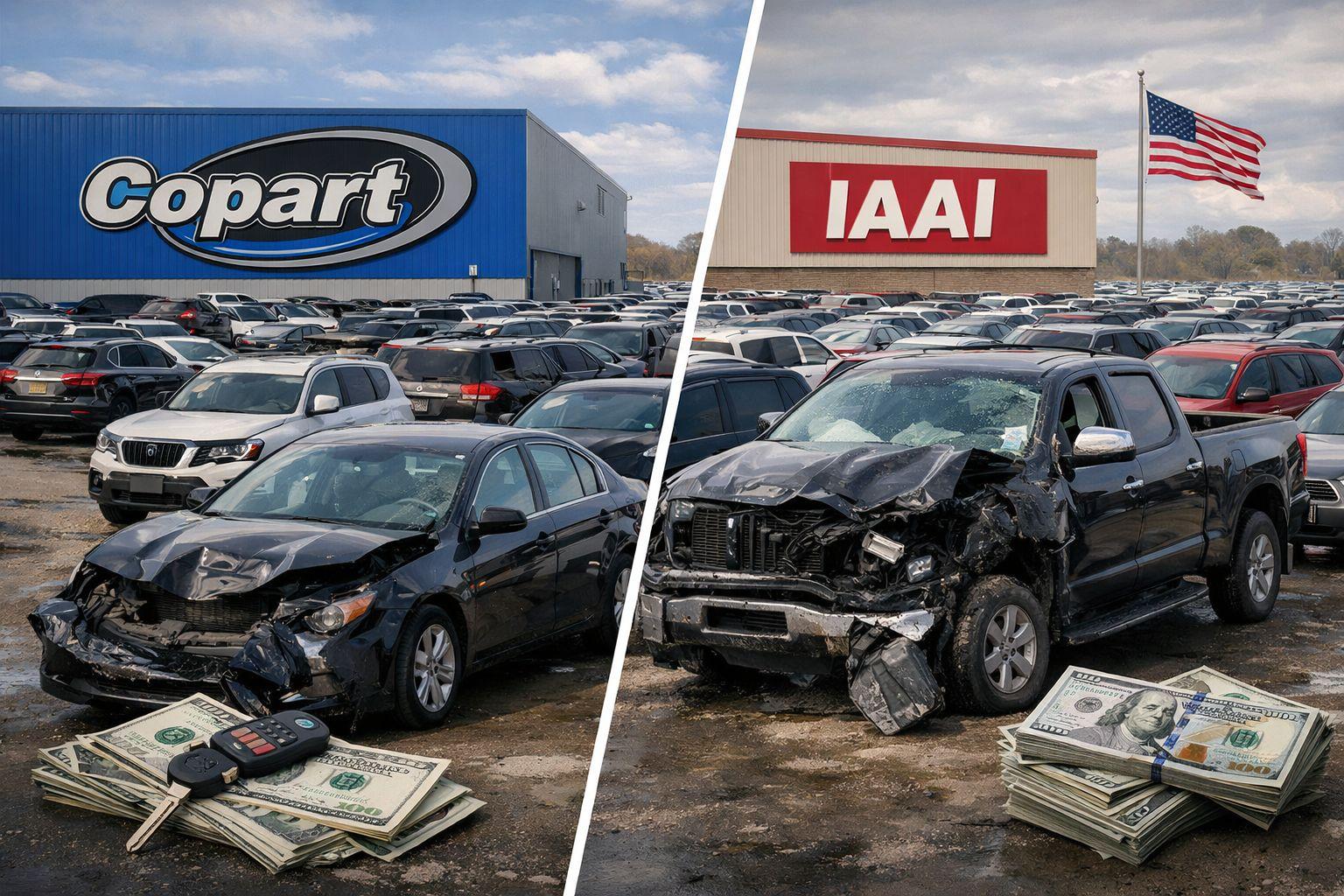
Table of Contents
If you're choosing between Copart and IAAI , stick to one simple axiom: these aren't just two American auctions, but two different models of the US used car market. Copart is the largest auction in the US (over 200 locations) with a high variety of lots and competitive bidding. IAAI is an auction in the US with a high concentration of total-loss insured vehicles and a structured lot list (over 180 locations).
Choosing between Copart and IAAI depends not on which auction is "cheaper," but on your purchasing goal and final budget in Ukraine. For the Ukrainian market, the differences between these auctions manifest themselves in the lot structure, seller types, bidding mechanics, and the implications for import and initial registration. At Acar.ua, we view the choice of auction as a strategic decision that directly impacts the final project economics.
IAAI and Copart Auctions : What's the Fundamental Difference Between the Platforms?
Copart is the largest online auto auction in the US, working with insurance companies, banks, leasing companies, dealers, and corporate fleets. Copart auctions a large volume of lots with varying statuses, from salvage and repairable to clean title. According to official reports, Copart sells over 1 million vehicles annually, equivalent to an average of 2,500-3,000 transactions per day.

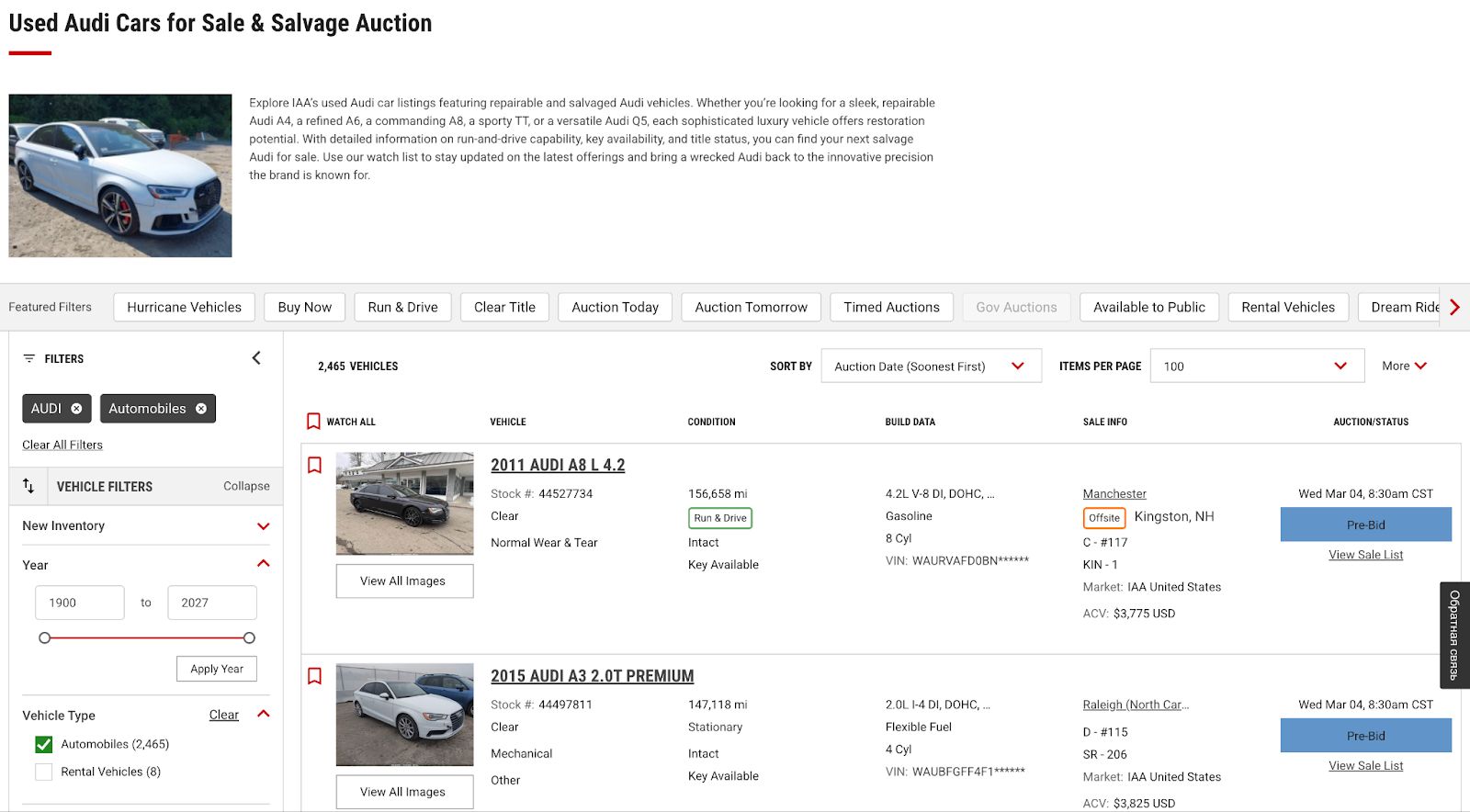
The IAAI is an insurance auction with a significant share of total-loss vehicles auctioned after insurance claims. At IAAI USA, a significant portion of the auction is made up of insurance lots, where the sale source (Insurance Company), Primary Damage category, Run & Drive status, and ACV insurance rating are systematically reflected in the lot cards. Lot cards are typically structured more uniformly, which simplifies initial analysis.
What is the difference between IAAI and Copart ?
The difference between Copart and IAAI lies in the offer structure and bidding process. At Copart, you might see dozens of lots for the same model, each with varying levels of damage—from minor frontal damage to severe body geometry—and competition for the most viable options is usually higher. At the IAAI auction, you'll mostly find vehicles with clearly defined damage categories (front damage, rear damage, flood, rollover) and a clear total loss logic from the insurance company, but the selection within a specific model is usually much narrower.
Copart is like a large warehouse with many cars, a wide range of conditions and prices. At this auction, the chances of finding an unusual trim level or a rarer configuration are higher. But the competition for good lots is also proportionally higher. If you're willing to choose and analyze, Copart offers more options and alternatives.
The IAAI auction feels more structured. The lot description includes a detailed description of the car's appearance after the accident, the official damage assessment from the insurance company, and the estimated value of the car before the accident. This means that most of the assessment of the car's current condition has already been performed by competent authorities. Therefore, if you lack the experience to conduct a remote technical analysis of the lot yourself, we recommend using the IAAI auction.
A common myth: Copart USA is always about "badly damaged" vehicles, while the IAAI auction is about "careful insurance companies." In fact, both auctions sell all possible vehicle categories. The difference isn't in the extent of damage, but in the concentration of total-loss insurance, the structure of information presentation, and the density of competition within a given model.
Lot Types and Sellers on I AAI and Copart : How the Source of Sale Affects Buying Risk
At Copart and IAAI auctions , it's important to consider not only the vehicle's condition but also its source. The same level of exterior damage may represent a different risk profile depending on who is bidding on the vehicle.
Cars come from:
- insurance companies;
- banks and financial institutions;
- leasing companies;
- corporate fleet operators.
An insurance company sells a car after the insurance claim has been settled. This means that before the lot is put up for auction, the damage assessment is completed, the damage category is recorded, and the pre-accident insured value is calculated. A bank sells a car after it has been repossessed for non-payment of a loan, where technical diagnostics are often minimal, and the description may be perfunctory. Leasing and fleet operators sell cars after the contracts have been completed. They may appear neat, but there is a higher risk of hidden wear and tear on components that is not reflected in the lot card.
The type of seller at Copart and IAAI auctions influences the completeness of information, the likelihood of secondary damage, the correctness of the assembly, and the speed of transfer of original documents.
Let's look at an example. Two identical crossovers with similar damage to the front end. The first was listed by a bank after a financial default—the description contains no information about the condition of the suspension or electronics. The second was listed by an insurance company with a clearly documented damage category and insurance assessment. Externally, the cars are similar, but the level of technical uncertainty is fundamentally different. Therefore, when analyzing a lot at Copart or IAAI auctions, the vehicle's origin and the depth of the pre-auction due diligence should be the basis for the selection and decision.
Copart or IAAI Auction: Fees, Competition, and the Actual Final Price of a Car
When comparing Copart and IAAI auctions, you should also understand how the final price is determined. Don't rely solely on the starting bid. In practice, the starting bid at Copart USA is lower than at IAAI, and you may find yourself getting better offers. However, the final price is determined not by the starting bid, but by the bidding dynamics and the auction commission.
The final price of a car after leaving the auction consists of three elements:
- 1Winning bet (hammer price).
- 2Auction commissions (buyer fee).
- 3Mandatory fees.
Copart USA has a progressive commission scale. The higher the final bid, the higher the buyer fee in absolute terms. The commission is calculated based on a table of price ranges per lot, so the fee increases as you move up in price range. In the $5,000-$15,000 range, the buyer fee on Copart will be higher than on IAAI for a similar lot price.
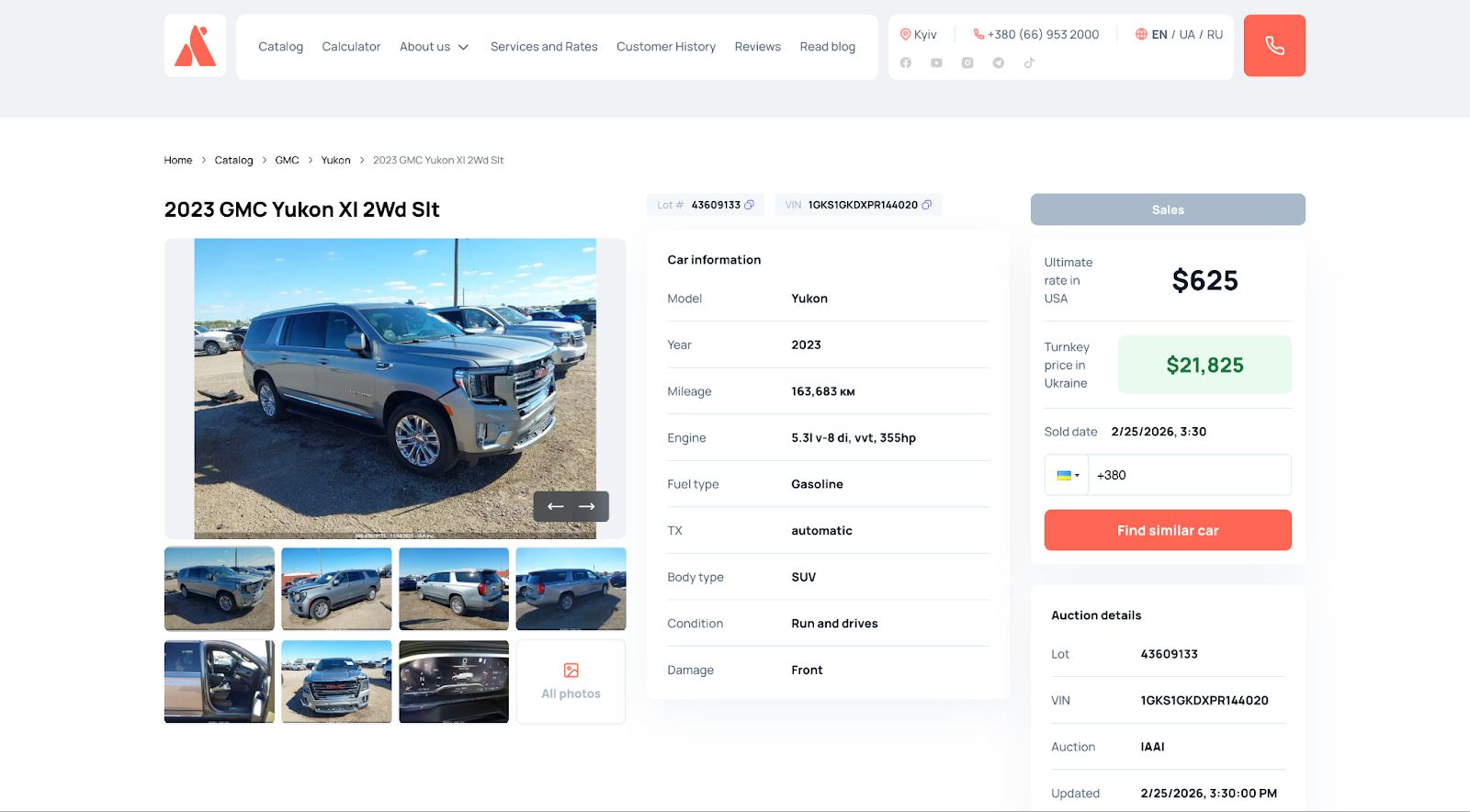
Keep in mind that at the Copart auction (USA), the bidding density for liquid models is much higher, so the final price often rises sharply in the last minutes of the auction.
For example, consider a 2020 sedan with similar damage. The starting bid on Copart was $4,800. During the bidding process, due to intense competition, the price rose to $9,600. At this price, the buyer's fee was approximately $1,200, plus mandatory fees of approximately $150. The final price before removal was approximately $10,950.
At IAAI, a similar car started at $5,900 and sold for $9,300. The commission for this bid was approximately $950, with additional fees of approximately $140. The final price was approximately $10,390. The difference between the sites was approximately $560, or approximately 5% of the total transaction price.
A full calculation of the final purchase price on Copart or IAAI, including commissions, fees, and logistics to Ukraine, can be done using our US car calculator .
Copart or IAAI : Documents, Title, and Risks of Car Registration in Ukraine
For customs clearance, certification, and initial registration in Ukraine, it's important that the vehicle has the correct title and that the original document is received on time. Without the original title, a full export process through a U.S. port is impossible. Problems arise not because of the choice of Copart or IAAI , but because of the speed of document processing by the seller and the state where the vehicle is registered.
Title issuance times and possible delays
In some cases, the document is transferred within 3-5 business days, while in others, the wait can take 2-4 weeks, especially if the seller is an insurance company with internal approval procedures.
For example, a car was won at the IAAI , but the insurance company only issued the title 28 days later. A similar listing on Copart was from a private seller, and the original title arrived within 5 business days. The difference in days will affect shipping times and storage costs at the yard.
That's why at Acar.ua, we check the title status in advance of bidding and take into account potential timeframes for obtaining it. This reduces the risk of downtime and additional costs. For more information on the procedure for registering and initially registering a car from the US, please see our section on customs clearance and certification.
Which is better – Copart or IAAI ? Choosing an auction depending on the purpose of the purchase
Choosing between IAAI and Copart should always start with your goal. There's no "best" auction; there's the right strategy for a specific purpose: resale, personal purchase, risk minimization, or finding a rare part.
|
Selection criteria |
Copart |
IAAI |
|
Access to rare configurations |
Higher chance of finding non-standard versions (Sport, Limited, special packages) |
Rare configurations are rarely encountered |
|
Frequency of occurrence of repossession and fleet lots |
Higher |
Below |
|
Share of total loss insurance |
Present, but mixed with other categories |
More concentrated |
|
Rate volatility |
Frequent jumps in the last minutes of trading |
Smoother dynamics |
|
Predictability of the final price |
Lower due to competition |
Higher with comparable demand |
|
Suitable for a buy-to-rest strategy |
Yes, a wide range of damages, but professional analysis of lots is required |
Yes, it is much easier to filter by damage types, but the choice is narrower |
When the Difference Between Copart and IAAI Isn't Essential
- If the model is liquid and is regularly presented on both platforms.
- If the final cost after calculation differs within 3-5%.
- If the purchasing strategy is focused on a specific lot, and not on searching for “where it’s cheaper.”
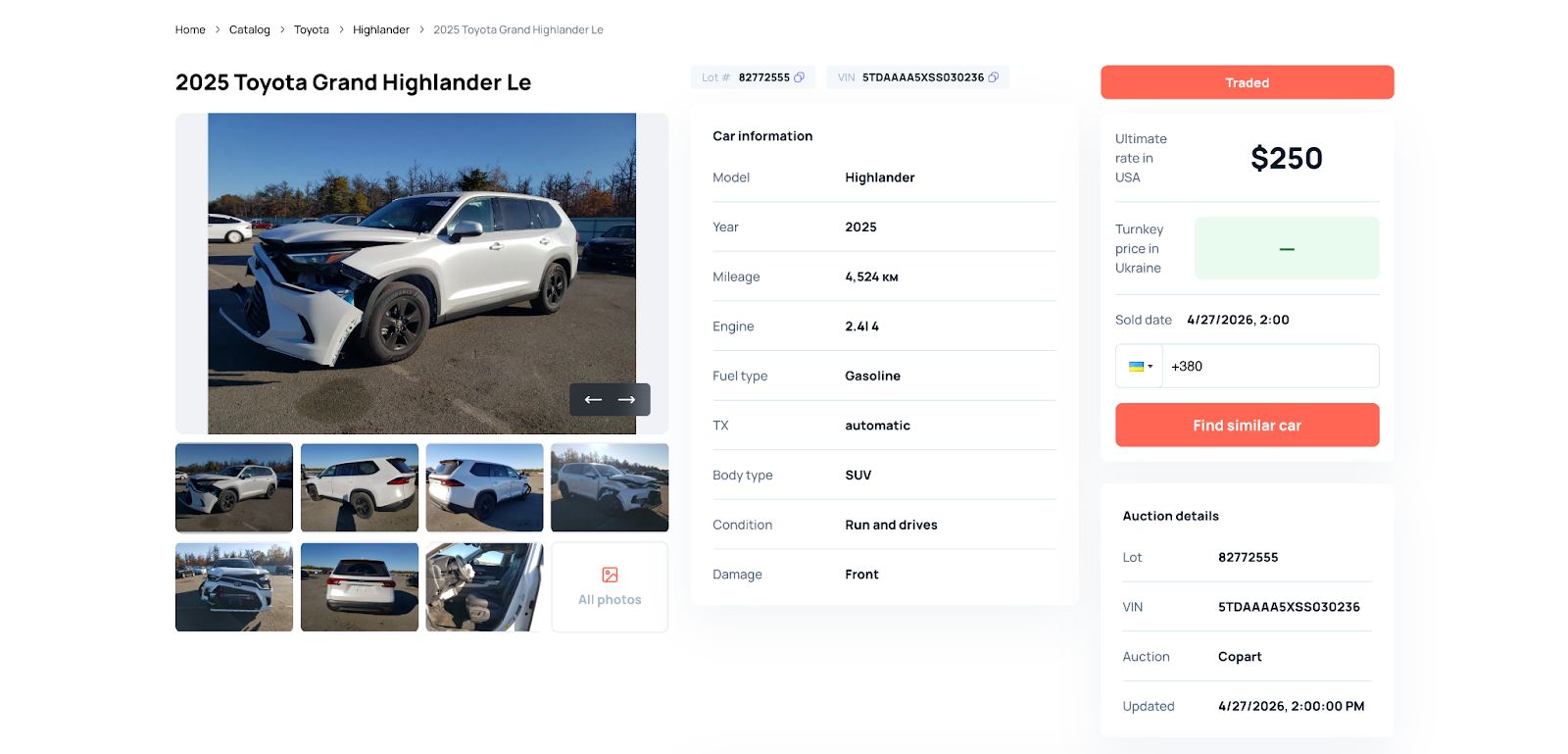
In such cases, the condition of the car and the economics of the transaction are decisive, not the name of the auction.
P.S.
The Copart auction offers more variety and more aggressive competition, while the IAAI auction offers a more structured presentation of insurance lots and often calmer bidding. However, in 70% of cases, the choice is determined by the purchase objectives and the specific vehicle's specifications.
Acar.ua works with both Copart USA and IAAI USA. We analyze lots based on the client's goals and project economics. Current offers and search options are available in our US car catalog or through a custom search request.
FAQ
Can an individual from Ukraine directly participate in Copart or IAAI auctions ?
No. Participating in the auction requires a dealer license or registration through an authorized broker in the United States. Ukrainian buyers typically work through an intermediary who provides access to the auction, pays for the lot on behalf of the client, and arranges export.
Are the deposit requirements different for Copart and IAAI?
Yes. The deposit amount depends on the access type (broker or direct US registration) and the intended bet amount. Typically, the deposit is 10% of the maximum trading limit, but minimums may vary.
Is there a difference in the geography of Copart and IAAI sites?
Both networks are represented throughout the United States. However, the specific storage location affects the cost of domestic shipping to the port. Sometimes, the selection of a lot is determined not by the auction, but by logistical convenience.
Does the payment speed for a won lot differ?
Payment deadlines are similar—usually 1-2 business days. Late payments incur penalties and may result in the broker's account being blocked.